

The Mystery of Migration
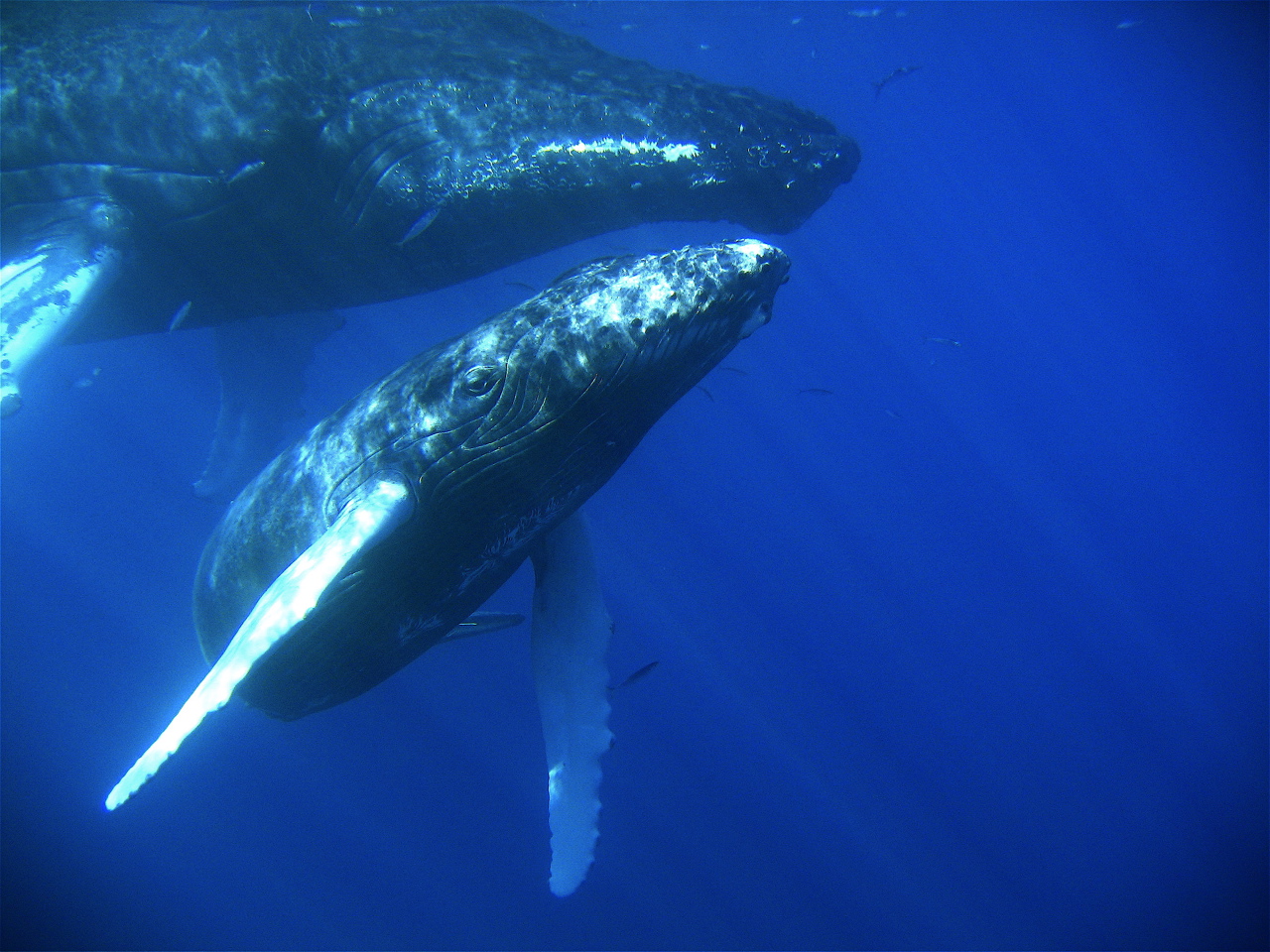
A mother humpback whale and calf on the Silver Bank
Each winter, up to 7,000 of the 10,000 or so humpbacks in the western North Atlantic spend time in and around the warm, shallow waters of the Silver Bank, where we are lucky to rendezvous with them. Swimming half an ocean basin is a long haul by any standards but is a twice-yearly undertaking for the humpback whale. Reflecting on their journey raises more questions for me than it answers.
We understand why; they travel north to feed, south to breed. But I can’t help but wonder what it’s like. What triggers the decision to leave? Do they discuss it? How tiring is it after not feeding for months in the Caribbean? Are the calves whining at their moms (as my child would be!)? How do groups stay in contact? How do they navigate so precisely? When do they sleep?
Humpbacks come to the Caribbean to court, mate and give birth. We witness the thrill of the chase for females and the love and tenderness between mothers and their calves almost daily on the Bank, while the act of mating itself has not been captured on film. But the Silver Bank is something of a sexual hotspot for what researchers know to be five separate populations of western north Atlantic humpbacks. Congregating in one place allows genetic mixing, with whales from different groups mating and breeding. Just how much inter-group mating takes place is uncertain; discontinuities in arrival timing means that groups of whales stay separate, but overall Atlantic humpbacks are genetically very similar (Stevick et al, 2003).
Warm tropical waters, however, are low in plankton. Clear and blue is attractive to us, but it’s the thick, grey-green of northern climes that host the bounty. To sustain a forty ton body mass requires lots of protein and fat in the form of small fish and crustaceans. As spring comes to the north Atlantic and increases in light and temperature kick off a rich food chain, whales locate themselves in the thick of the bloom to take advantage of nature’s abundance.
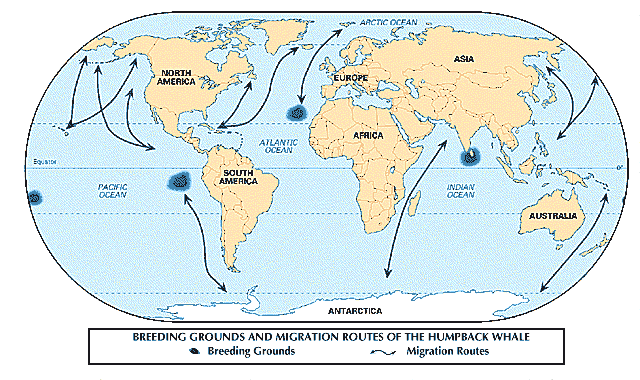
Humpback Whale Migration Routes and Breeding Grounds (image from Britannica)
Their journeys are long. It is almost a 1,400 mile swim to the Stellwegen Bank, and over 1,000 more for populations farther east around Greenland. Cruising at around 5 miles an hour the trips take several weeks and anyone who’s been in the water with a vessel steaming by at just a few knots can understand why relatively little is known about their day to day traveling experience.
Recently published work on humpback whales (Horton et al, 2011), shows that they swim in almost exactly straight lines. No conclusion as to how they did this was reached; scientists speculated that they may use the earth’s magnetic clues, like a biological compass, or navigate by the stars and moon.
Their journey north takes them past Bermuda where Andrew Stevensen, a guest this year, is also fascinated and curious about their mid-ocean behavior and is documenting time spent, perhaps taking a break from the long trip, in this island outpost. His beautiful film “Where the Whales Sing” gives viewers a window into a unique part of their lives.
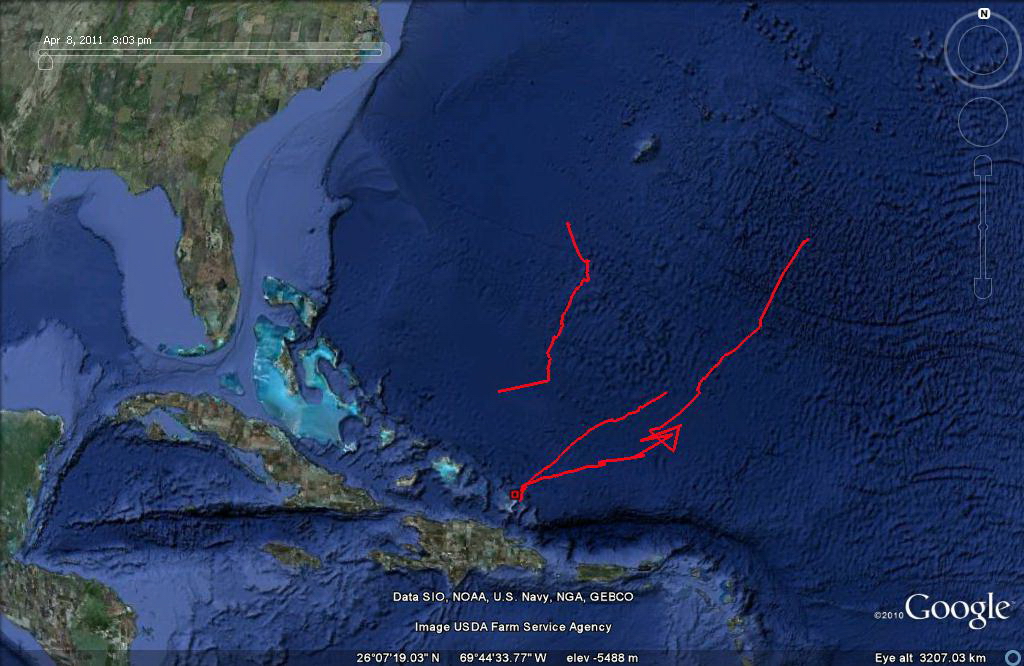
Silver Bank Humpback Whale Tracking Results, 2011, from Amy Kennedy, NOAA
From Bermuda to their feeding grounds takes them through some of the most heavily trafficked stretches of water in the world. At this time of year, whale related news headlines are dominated by ship strikes, entanglements and strandings. Collisions with vessels are a leading cause of death for humpback whales. Towards the end of this year’s season on the Silver Bank, Amy Kennedy from the National Marine Mammal Laboratory was aboard and successfully tagged a number of whales. Her results showed animals clearly heading direct to either the Stellwegen Banks / Gulf of Maine region or Greenland. Studies like these are important, not least because better understanding of routes allows ocean managers to optimize shipping lanes and justify safe speed zones.
But the tags do not always transmit continually. And despite best efforts, many are quickly dislodged. Humpback whales are revered in the animal kingdom for their songs; we know they are in constant communication, but we have no idea what they are saying! We still know little about the day-to-day experience of migration.
It’s a biological fascination to me and despite the lack of knowledge it’s clear that whatever the hardships, including what humans throw at them, the rewards are worthwhile. And at each end of the ocean, whale watchers like us greet their arrival with joy.
Comments
The Mystery of Migration — No Comments
HTML tags allowed in your comment: <a href="" title=""> <abbr title=""> <acronym title=""> <b> <blockquote cite=""> <cite> <code> <del datetime=""> <em> <i> <q cite=""> <s> <strike> <strong>